
Setting Sail!
Within moments of leaving the marina and setting sail, our boat was immediately flanked on both sides by a pod of dolphins (video left). They jumped and swam alongside us for practically an hour while we gained speed and made adjustments to our sails. We took it as a good sign for our journey ahead!
However, the great sailing didn’t last long. A few hours into our trip, we started hitting 10 – 30 ft swells which turned the boat into a washing machine. Every time we hit a swell, the boat would rock back and forth. We had to hold on with at least one hand at all times to make sure we didn’t fall, even in the cockpit. It made for a pretty uncomfortable start to our voyage, and the rocking lasted for a full two days before we got any relief. Luckily, we had three different treatments on board to prevent sea sickness that really saved the crew in those first few days. We each wore a scopolamine patch which is the most commonly prescribed treatment for sea sickness. It typically lasts for two days and is mainly only needed for the first few days of the trip before you get your sea legs. We also had Sturgeron, which is a pill that is used by the British Navy, and Meclizine, a common vertigo treatment.
The rocking made it hard to cook or prepare any food in the galley. It’s one thing to chop vegetables in a regular kitchen. It’s entirely something else trying to chop vegetables in a boat that’s rocking violently. You have to wield a chef’s knife while also trying to keep your balance. A common question I’ve been asked is what we typically eat during a long voyage. For breakfast, we had milk with cereal or granola. Though we preferred yogurt, it is much easier to store milk as the one we had didn’t need to be refrigerated, saving space in the fridge for other perishable items. The unrefrigerated milk weirded Eva out so she usually opted out of breakfast entirely. For lunch, we started by having a tomato, cucumber, pepper, and onion salad with a sandwich. However, as mentioned previously in the Lanzarote blog post, our tomatoes and cucumbers only lasted a few days in their vacuum sealed packaging. It seems that the acidity of the produce was amplified in the sealed package and spoiled them much faster. As the trip went on, we typically had cheese toasties or ramen for lunch if we were hungry. There were many days when no one on board had much of an appetite. And finally for dinner, I always made some combination of meat + a side (potatoes, couscous, polenta, etc). I purchased these food prep packets from Poland which made it super easy to cook with minimal effort. It comes with an oven proof bag and spices to marinate a protein of your choice. You pack the bag and then cook it in the oven for about an hour. While that’s going, you make the side on the stovetop. The prep time is about 10 minutes so you only spend a small amount of time in the rocking galley.
Loss of appetite isn’t the only shift that one feels when starting a voyage out on the open ocean. Below are a few changes we felt during the start of our trip that are commonly felt among sailors:
- Shift in Food Tastes – similar to what a woman feels during pregnancy, your food preferences can change entirely on board. For example, Eva completely lost any appeal towards sweets. We had some chocolate and stroopwafels (her favorite) but she could barely look at them without getting mild nausea
- Hearing Voices – though common, this is slightly frightening when it first begins to happen. Because there is nothing around, the eolian sound from the wind comes from hitting the boat, whether it be the mast, the sails, the rigging, etc. The wind starts sounding like talking, and you can sometimes hear different voices. When you’re sitting on watch in the middle of the night, it’s usually so dark that you can’t can’t even see the stern or the water outside the boat. To start hearing voices in the darkness is certainly jarring!
- Changed Vision – both Wojtek and Eva reported that they had changes in their vision. Wojtek said he was able to see better out on the ocean while Eva couldn’t read without removing her glasses or contacts even though she’s never had issues with neat-sightedness
Halfway through the first week, the whole crew was ready for a break in the swells and rocking. When it finally stopped, we had a day of practically no wind. The water and wind were so quiet, and there were no sounds. Not even birds because we were too far from land. It was beautiful and calming, but not quite the weather a sailor hopes for on their great Atlantic crossing!
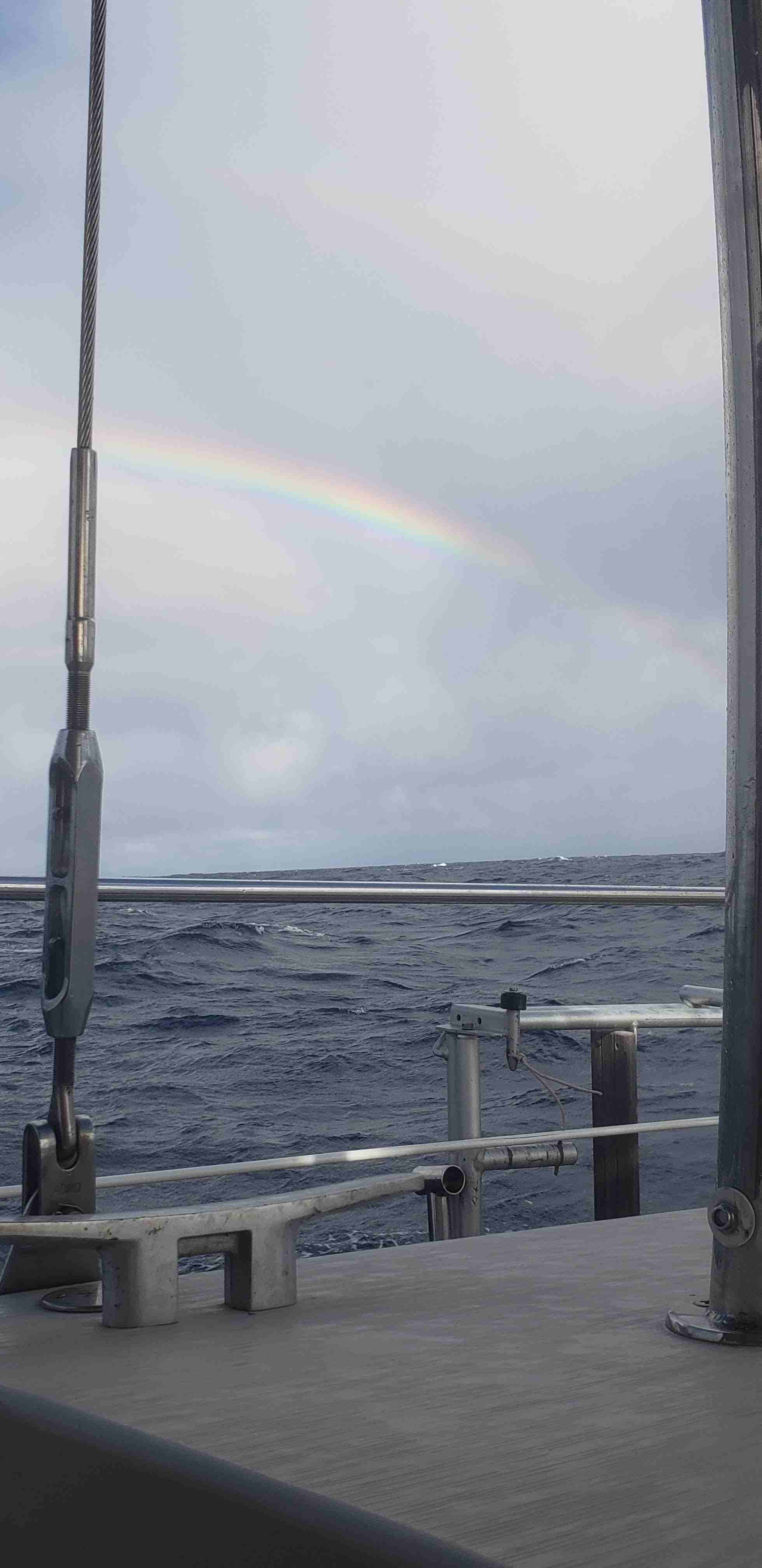
Finally, at the close of our first week, we had our first day of beautiful and perfect sailing weather. The wind was strong and in line with our sailing track. Though we were surrounded by squalls that entire day, they all kept dissipating before reaching us. This provided for a beautiful view of constant rainbows all around the boat. We were thrilled to finally get good sailing weather!
Our second week was spent taking advantage of the beautiful sailing weather and finding innovative ways to keep busy during the long stretches when nothing needed to be tended to. What many people don’t realize is that there is a lot of down time during a trans Atlantic voyage. Unless you’re changing sails, fixing something, or watching for squalls, you have quite a bit of time to yourself. Towards the beginning of the trip, we listened to a lot of podcasts and audiobooks since we weren’t sure if we would get more seasick trying to read from a physical book. We quickly got through all the cult and mystery podcasts Eva had downloaded within the first few days. After we adjusted to the motion of the ocean, we switched to regular books. I finished The Prodigal Daughter by one of my favorite authors – Jeffrey Archer. Eva read some Game of Thrones books and Scar Tissue, the autobiography of Anthony Kiedis from the Red Hot Chili Peppers.
Beautiful sunset & winds
One activity that we spent a good amount of time on was fishing. Prior to our trip, I visited an angler shop in Lisbon with Wojtek to pick up some gear. We had no previous experience fishing, but the owner was so passionate in his craft that he gave us a full bag of gear for free! He only asked that we keep him updated on our trip and any successes in fishing. To be frank, the first two weeks proved to be unsuccessful. Aside from some flying fish which ended up on deck at night, we didn’t catch any fish. We still fried up the flying fish and it was delicious though small. The day before Christmas, we finally got some luck and caught a beautiful skipjack tuna! The fish itself was very tasty, though not like a typical fish. It tasted more like chicken, and you really had to play up flavors by using herbs and lemons. We saved the majority of the fish for the following day’s Christmas Eve feast.

Fishing success! Skipjack Tuna
On Christmas Eve, we listened to Polish and English Christmas tunes throughout the whole day and even shared small gifts under our tiny tree! That night, I also made challah bread in my bread maker so we could have a sweet treat. I added raisins to make it similar to a Panettone Italian Christmas bread, and we added Nutella on top. We even had our first human contact on Christmas Eve when a French catamaran radioed us to ask for the wind forecast for the coming days and wished us a Merry Christmas!
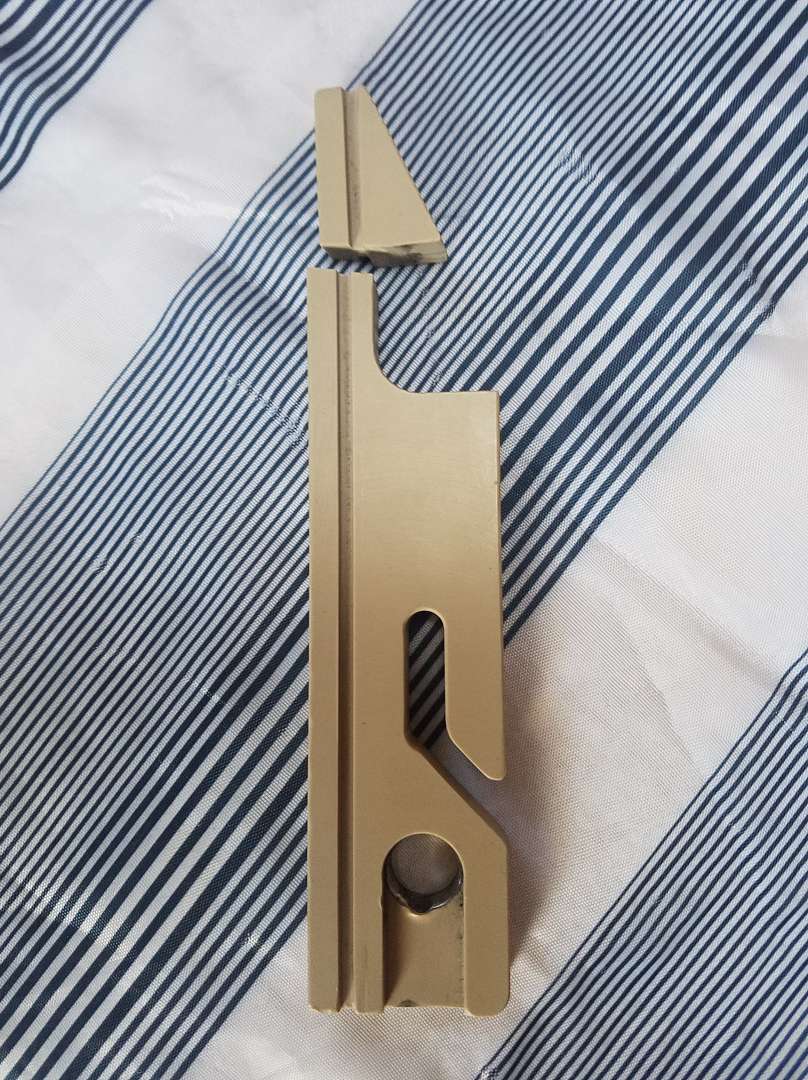
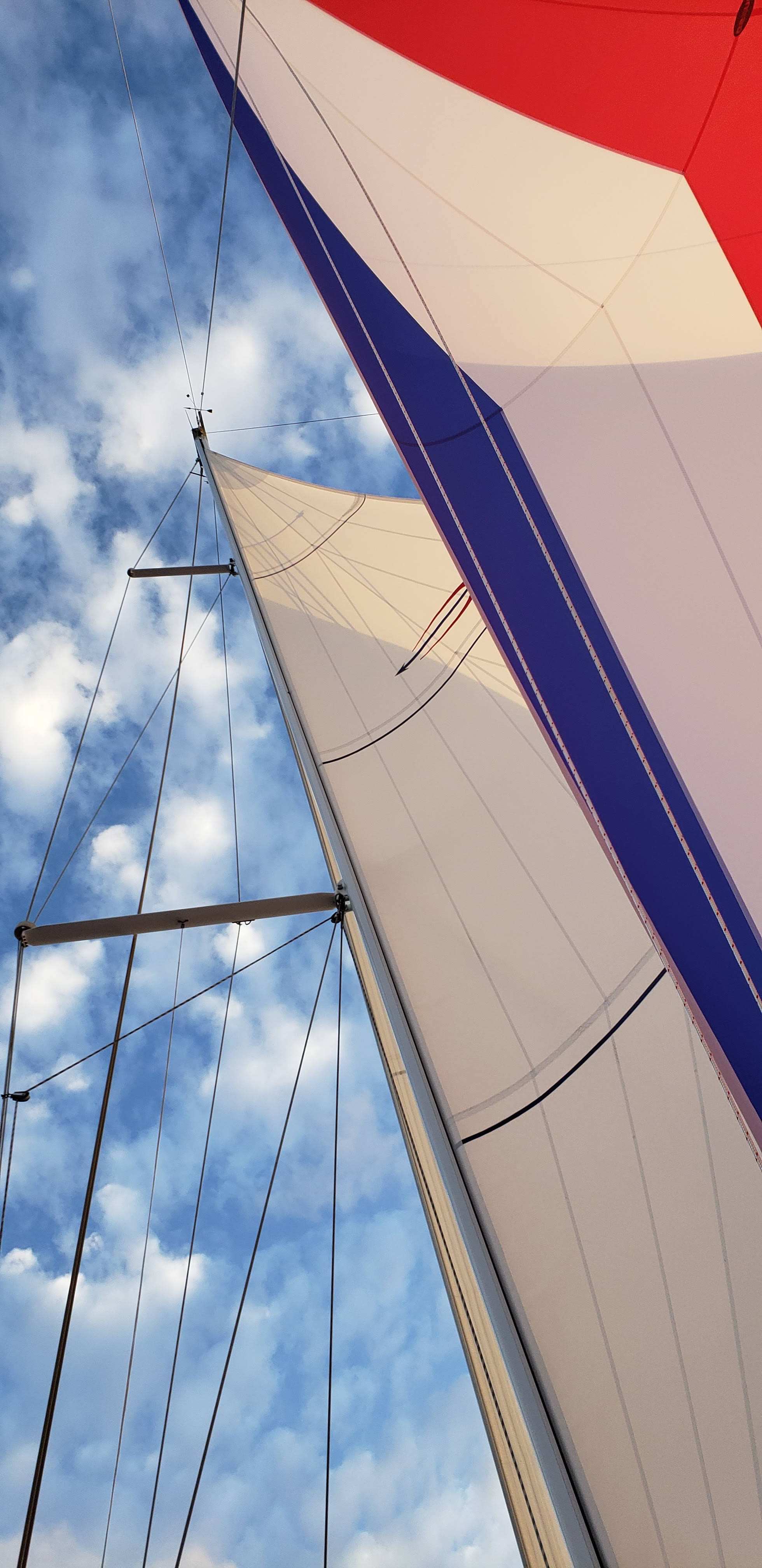
Going into our third week, we started hitting unplanned obstacles that really slowed down our speed. It started with weak winds and large swells, causing the sails to really flap violently when the boat rocked. It’s always painful for a sailor to hear the flapping sound of his sails but after just replacing all my sails in Gibraltar, I could hardly stand it! On these days, we were averaging a very slow speed of 2 – 5 knots. Additionally, after a few days of this weather, the ballooner hook broke. This is a piece used to raise the ballooner and basically took one of our main sails out of commission. The ballooner is an important sail that can help increase your speed, particularly when there are weak winds from behind. With these two issues, our projected arrival date was pushed back to the beginning of January. This was disappointing because we were excited to meet up with Joanna and Marysia before the New Year, but there’s not much you can change about this kind of situation so we did the best we could and re-evaluated our plan. We were supposed to end our voyage in Turks & Caicos but because of the delay, we decided to change to St. Lucia. It’s about 1000 nautical miles closer than Turks so we would be able to arrive faster by Jan 1st.
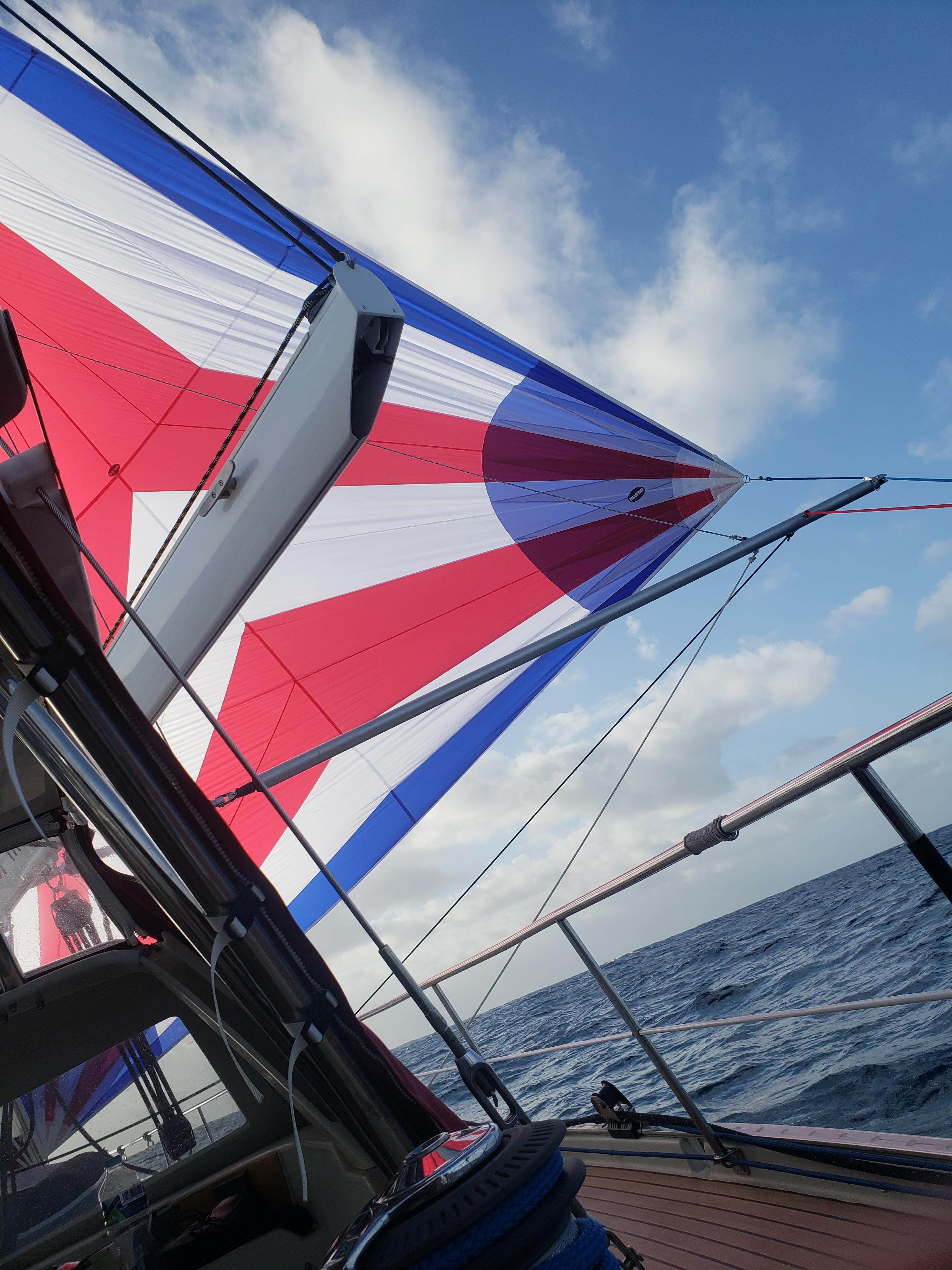
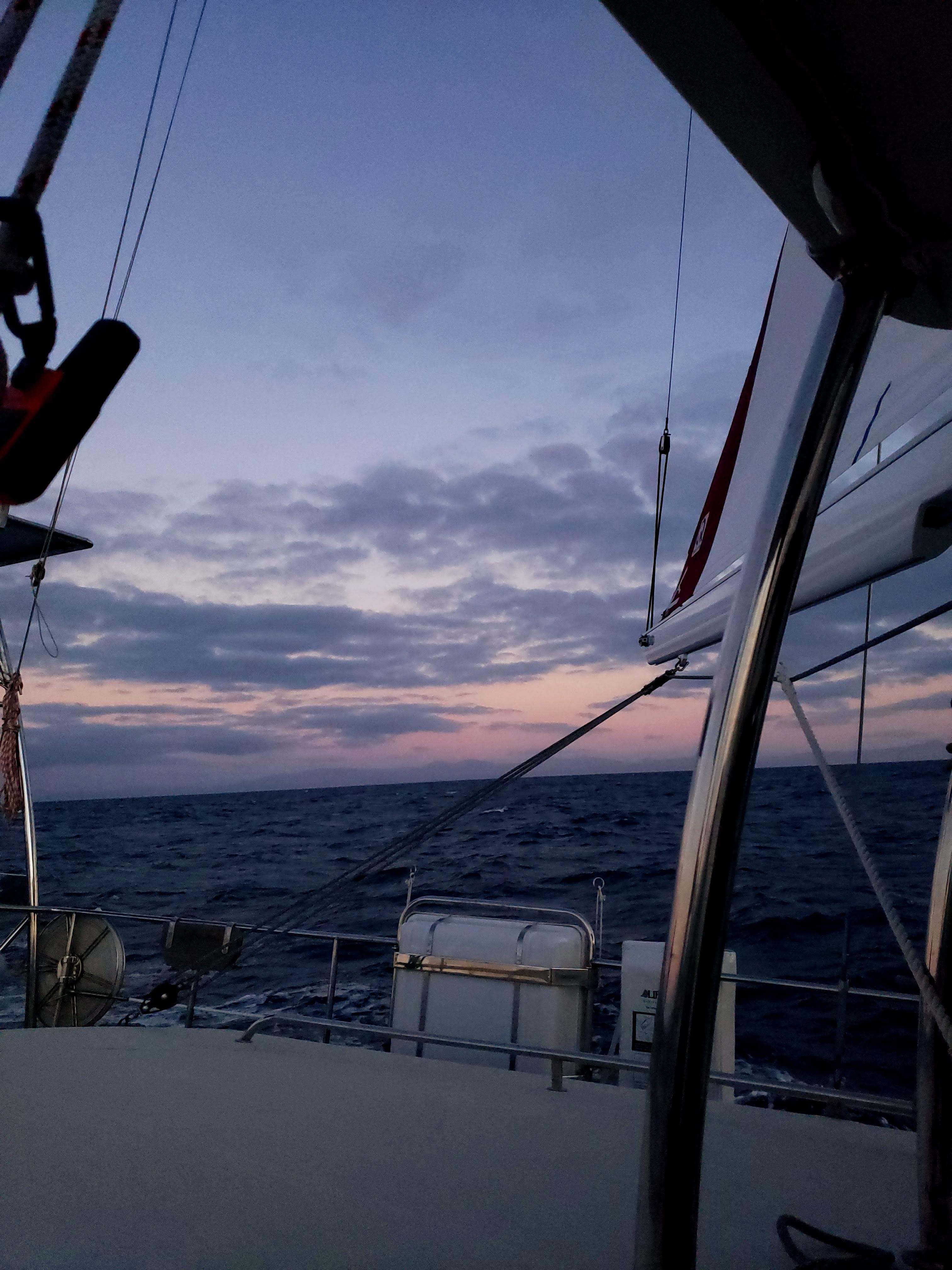
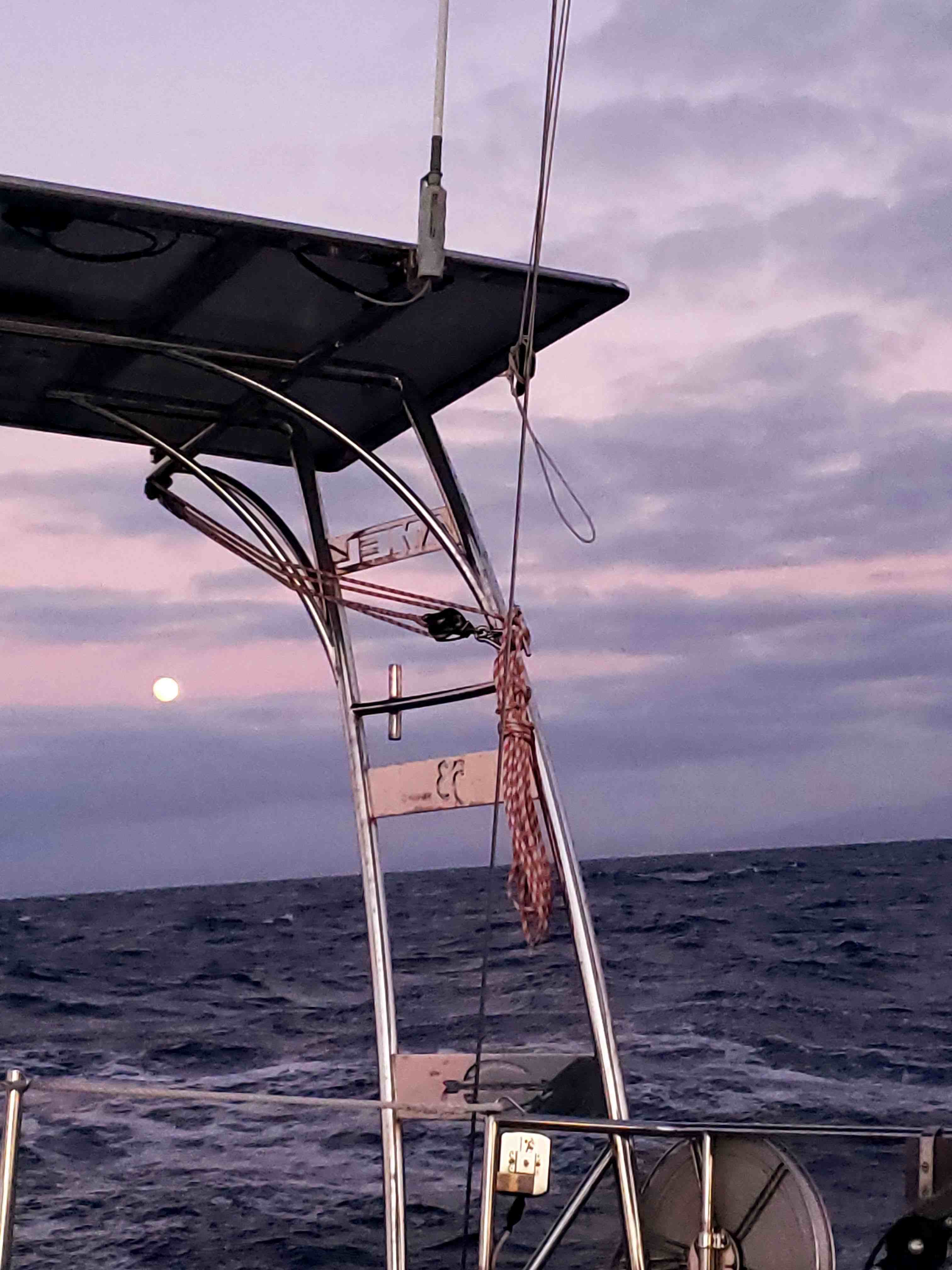
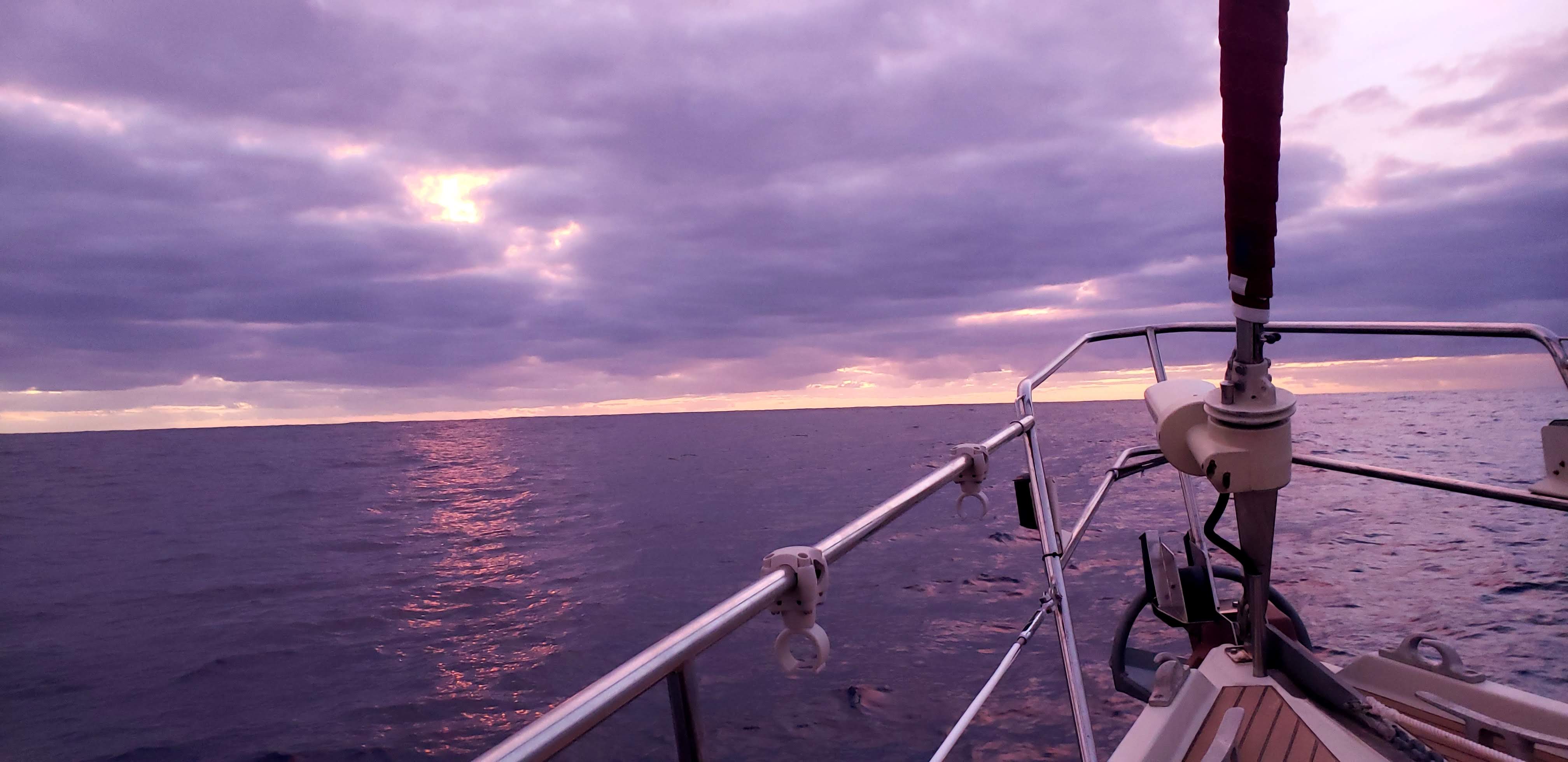
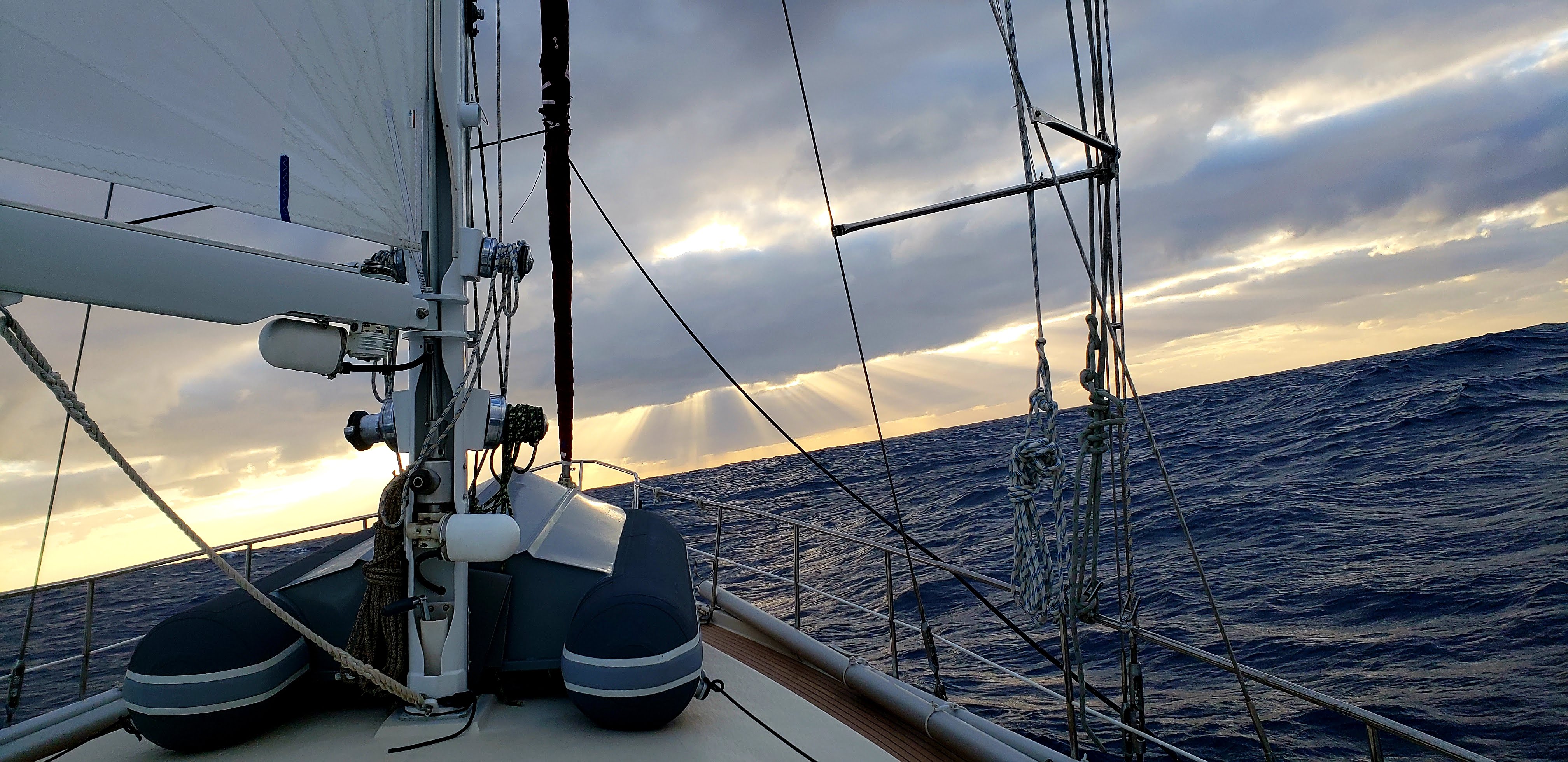
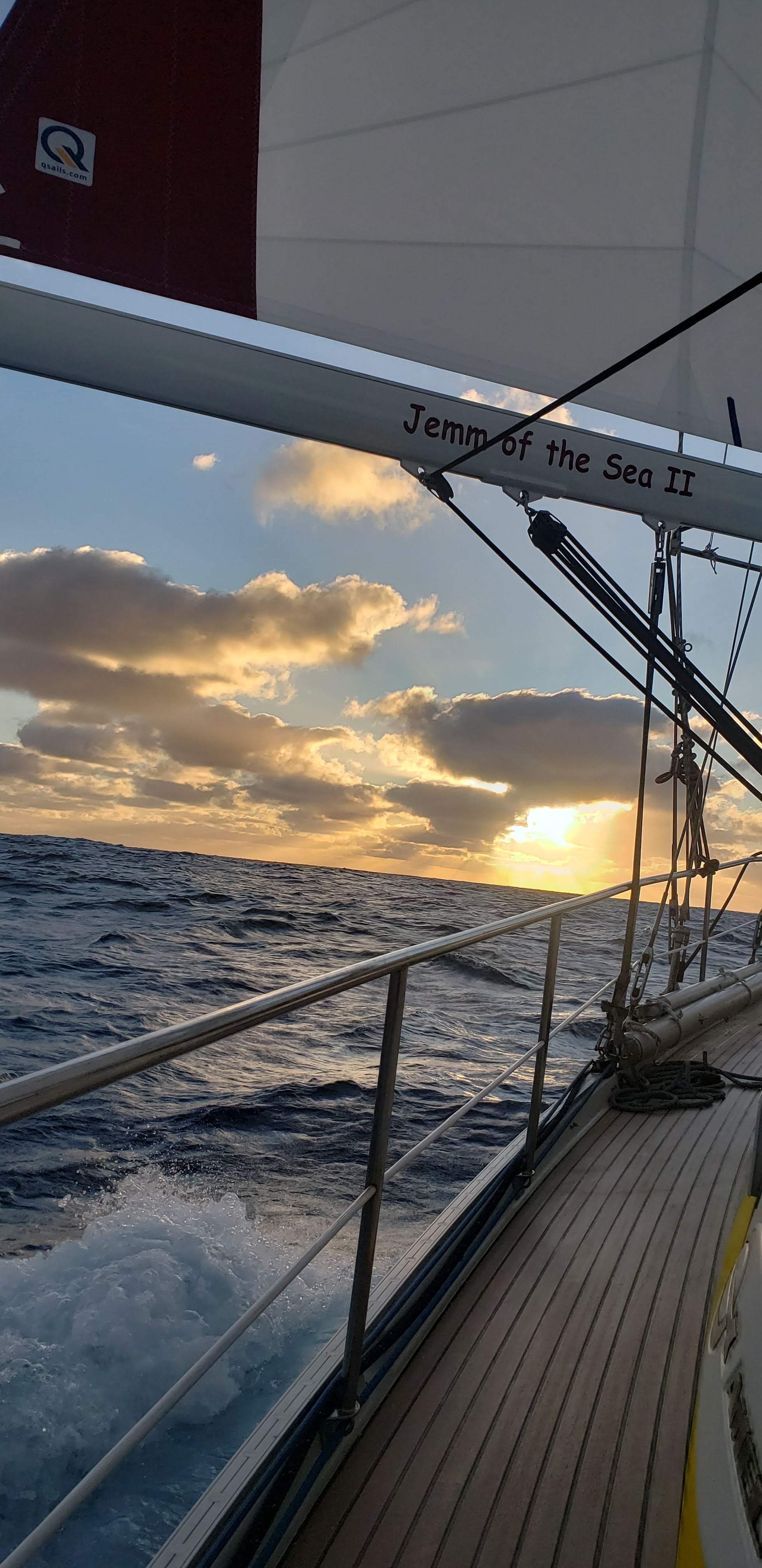
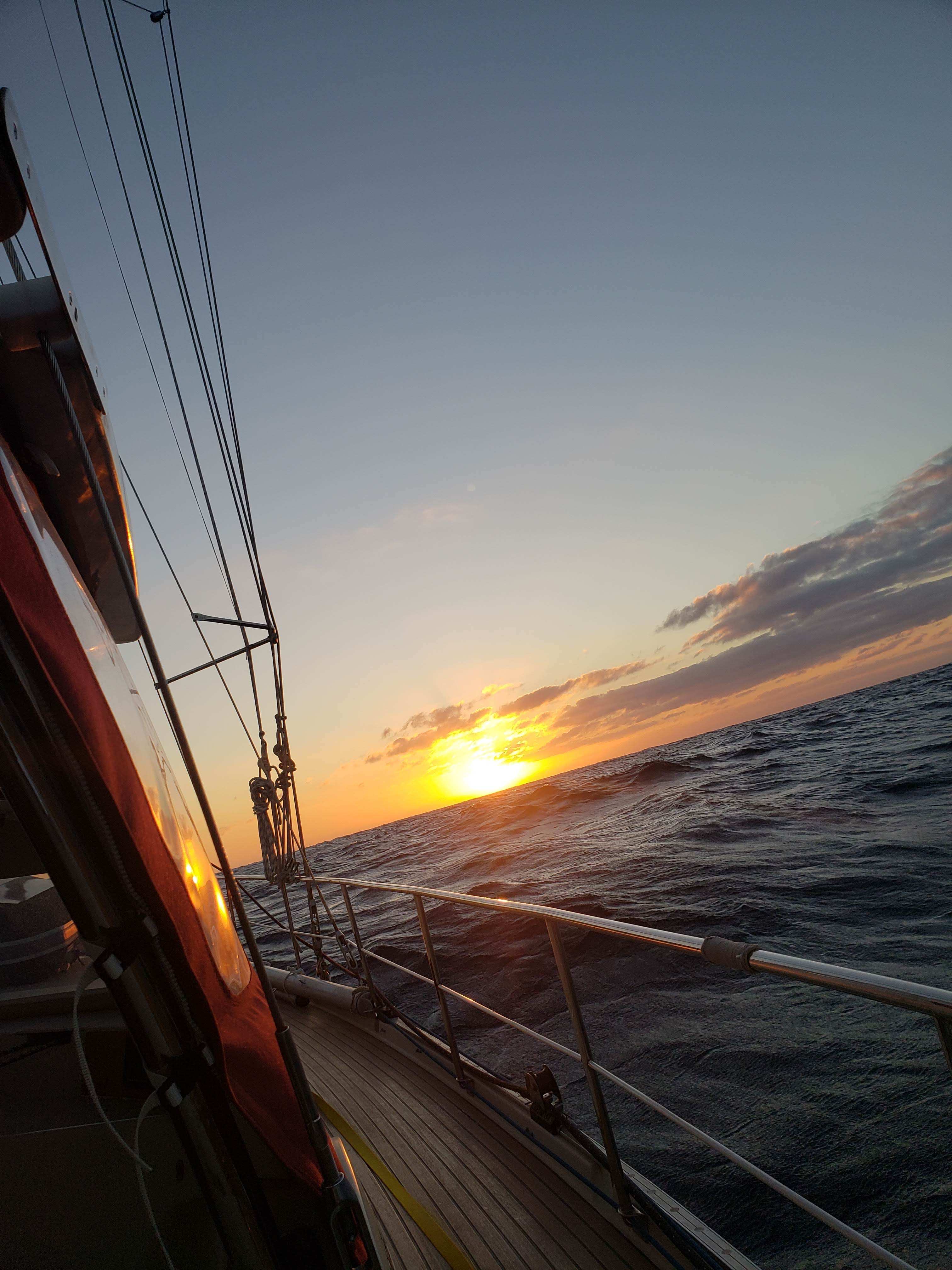
As our trip was winding to a close, we reflected on the last three weeks. Though we were missing some aspects of land (particularly certain foods like TexMex and Olive Garden!), we really appreciated our time on the water. It’s rare that one can have such a long break from the hustle and bustle of life – work, responsibilities outside of the boat, technology, etc. With no service on the ocean aside from our satellite phone, we really got to unplug. Seeing the Atlantic Ocean in all her splendor was something we’ll never forget as well. The ocean can change weather in a matter of seconds from slow wind to 40+ knots of wind. Every sunset we saw was beautiful and unique. Some days it was calm and orange and other days, the whole sky was rosy pink. At night, there were a few hours between the sun going down and the moon rising when all you could see was millions of stars above you and glowing bioluminescent plankton in the water outside the boat.
Around 8am on January 1st, 2020, we reached Rodney Bay Marina in St. Lucia. We were covered in salt and pretty tired but so thankful for the experience! It’s a trip we will cherish forever and never forget!

Arriving in Rodney Bay Marina, St. Lucia
Pomimo, że czytaliśmy tekst w automatycznym tłumaczeniu na polski, więc z pewnymi niedoskonałościami stylistycznymi i różnymi lapsusami językowymi, to bardzo nas wciągnął. Podziwiamy Twój talent literacki, ale mamy niedosyt i czekamy na więcej wspomnień.
Wow! Great imagery. Hats off to you. I wouldn’t be able to do such a thing.