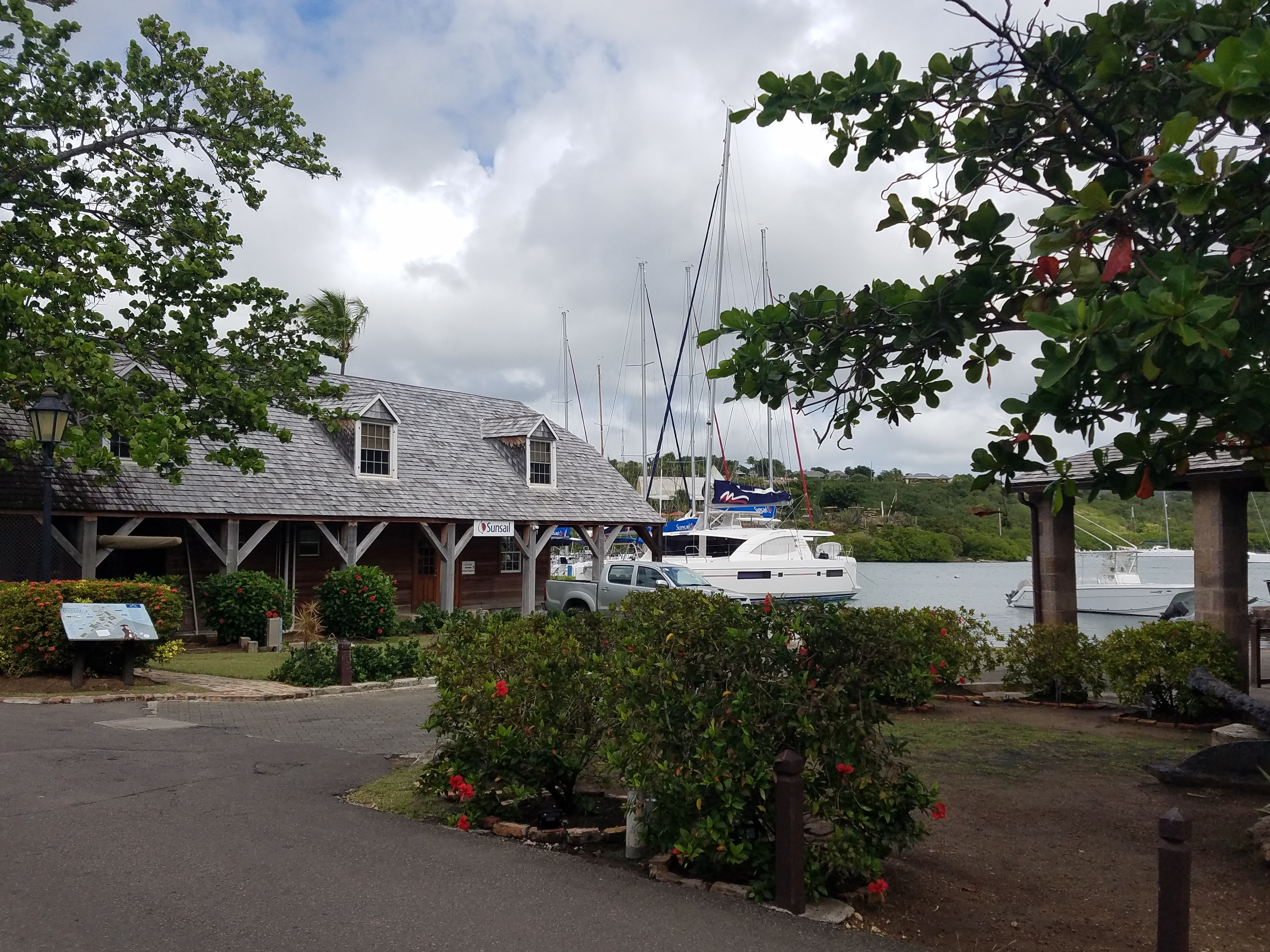
Antigua, and English Harbour in particular, is a boaters’ Mecca around the the Caribbean. And, for sure, our favorite place to hang around with our vessel.
From 1725 until 1845, English Harbour had been the location of the strong English military garrison presence and the main naval operation site for the British Navy. Its complicated and sinuous entry channel combined with artillery installations on the surrounding hills rendered English Harbour impenetrable to enemies’ assaults.
After 1854, the place fell into disrepair and abandonment. However, around 1950, The Society of the Friends of English Harbour led an effort to restore English Harbour to its previous state. This resulted in the creation of Nelson’s Dockyard National Park which is comprised of the Nelson’s Dockyard itself along with the marina and outlaying anchorages. The Nelson’s Dockyard National Park is a UNESCO World Heritage Site.
The Nelson’s Dockyard Marina, a part of the Dockyard National Park, consists of a docking wharf and three anchorages. The wharf is used mainly by super-yachts and bigger vessels while smaller boats moor around the anchorages.
 There’s also a boatyard, ship chandlery, a supermarket, and several restaurants located on the marina grounds or in close vicinity.
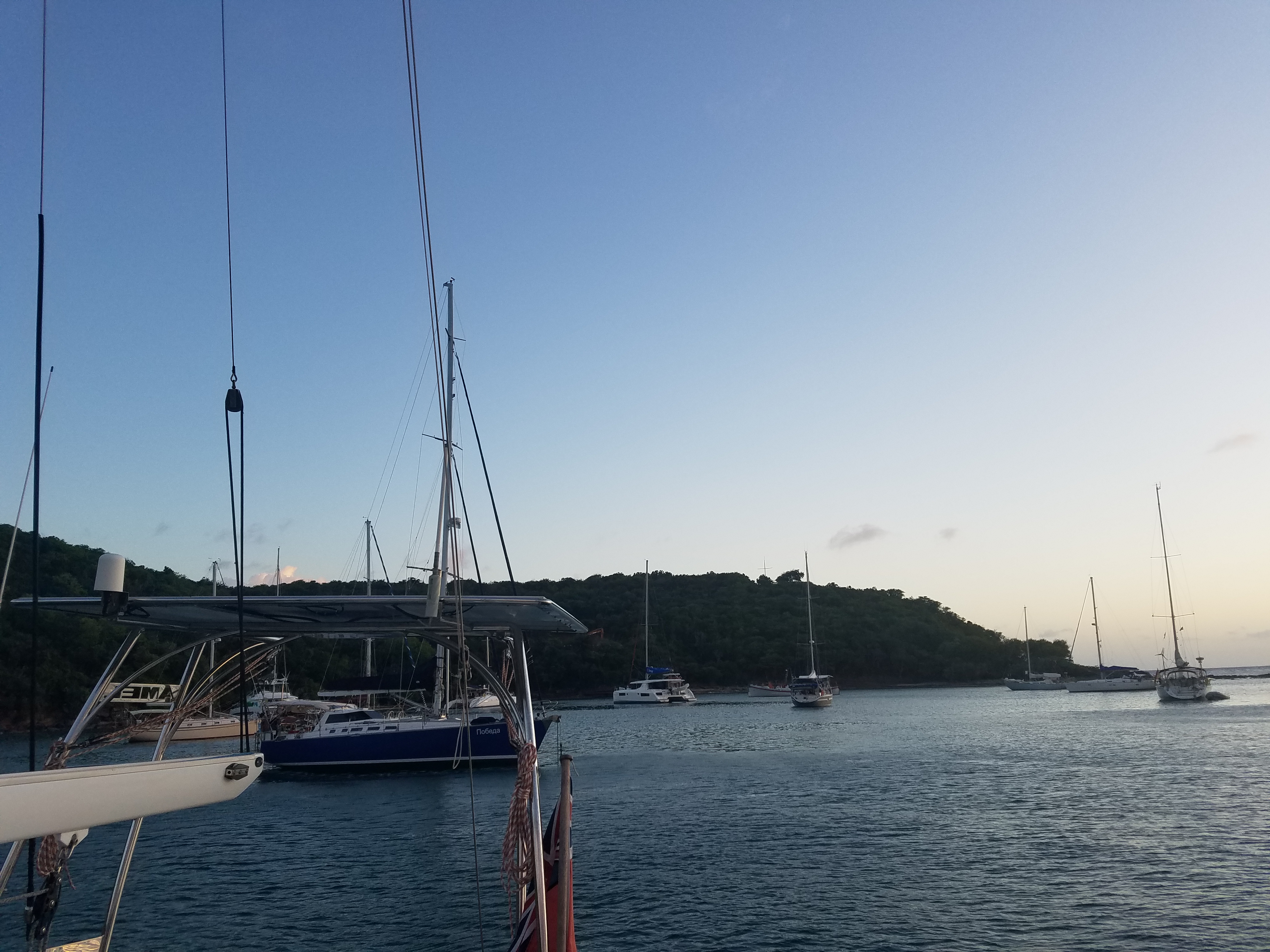
We anchored our boat at Freeman’s Bay, a place very popular with cruisers and located just at the marina channel’s entrance. It’s a very nice spot which may be overcrowded at times, but it offers great views towards both the open sea as well as the surrounding hills with the Fort Berkeley ruins to the West.
We hung around Antigua at the Freeman’s Bay anchorage for the whole ten days so sure enough, besides our normal on-boat self-cooked dinners, we were able to experience some local cuisine as well.
One night we visited Caribbean Taste restaurant. It’s a small yet cozy place run by a local woman that serves true Caribbean fare.
 The menu was quite extensive but nothing is cooked until you arrive there so you’re able to make your choices and state your food preparation preferences.
 We settled on Callaloo soup which, depending on the place, is cooked using some kind of local leafy greens, most commonly amaranth. In most places, this leafy green, whatever it may be, is called callalo or callaloo bush, hence the dish name.
 This was followed by a Jerk Chicken plate. In essence, it’s a Jamaican dish but its popularity spread all over the Caribbean. This restaurant’s rendition of this dish turned out to be worth our visit and money, of course!

Sure enough we could not forgo our dessert.
Each Friday night, The Copper and Lumber Store Historic Inn at the marina has a Seafood night. It serves local seafood prepared many different ways like BBQ-ed, steamed, fried… The night we attended, our feast was interrupted by torrential, tropical rain which did not diminish our appetites nonetheless!


On the morning of February 17, 2020, we raised the boat anchor and set our course for the next Caribbean adventure: the islands of Saint Kitts & Nevis.
We just sailed out of the English Harbour with the Island of Antigua still in our view.
We were about mid-way to the island of Nevis when the wind turned astern so I deployed a whisker pole.
 Antigua, and English Harbour in particular, is a boaters’ Mecca around the the Caribbean. And, for sure, our favorite place to hang around with our vessel.